Insights
Despite all the case data we have, it's difficult to pinpoint why climate displacement law is progressing slowly. What restrictions are holding back the creation of legal protection for displaced people? How do these restrictions vary across countries and regions?Here, in our Insights section, we publish all articles from comparative analysis to regional specifications. We don't just aim to to document court decisions. We want to ask why, and what these decisions mean.
Articles
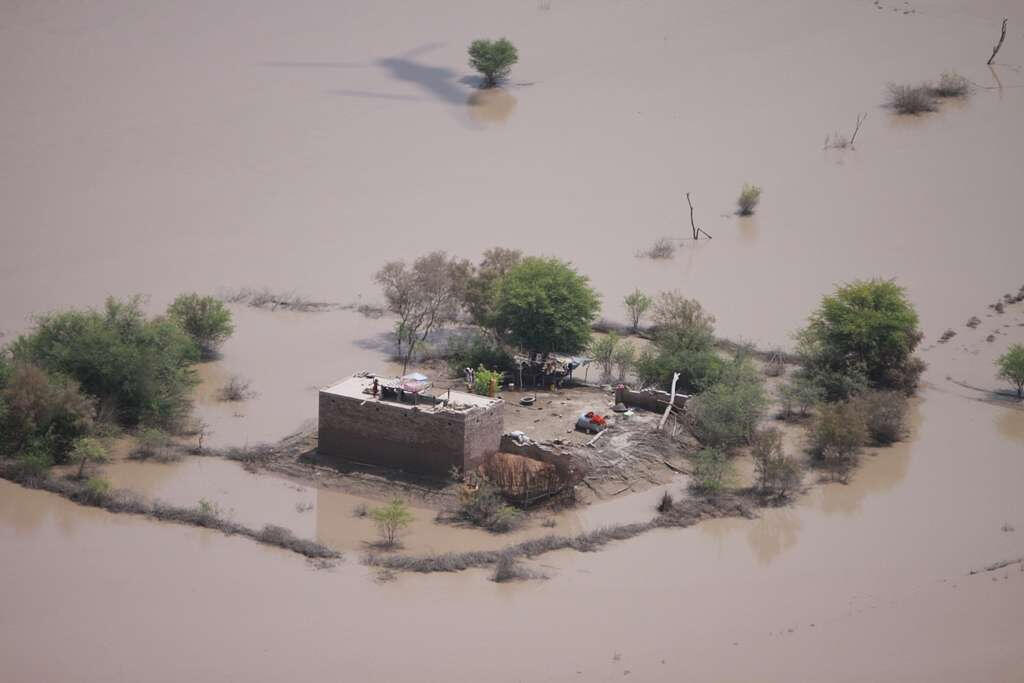
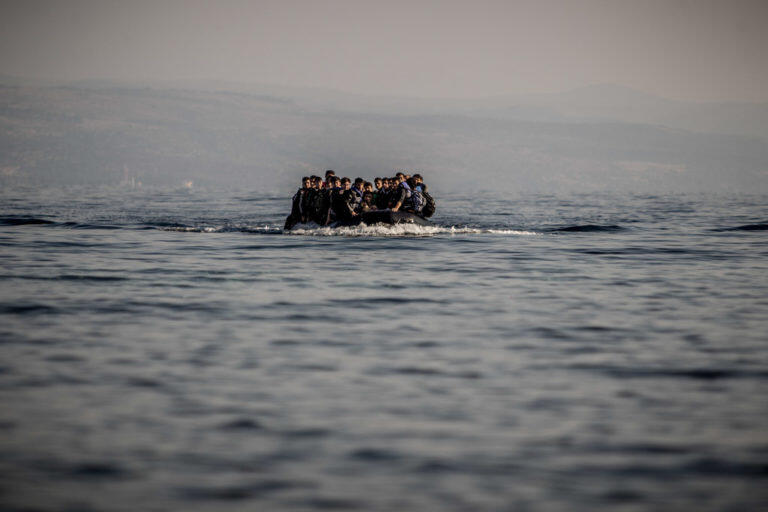
Submission Form
Interested in submitting your own work? Get in touch through the form below!
Sidestepped: Comparing Teitiota (2020) and Billy (2022)
Julia Zheng, July 9th 2026
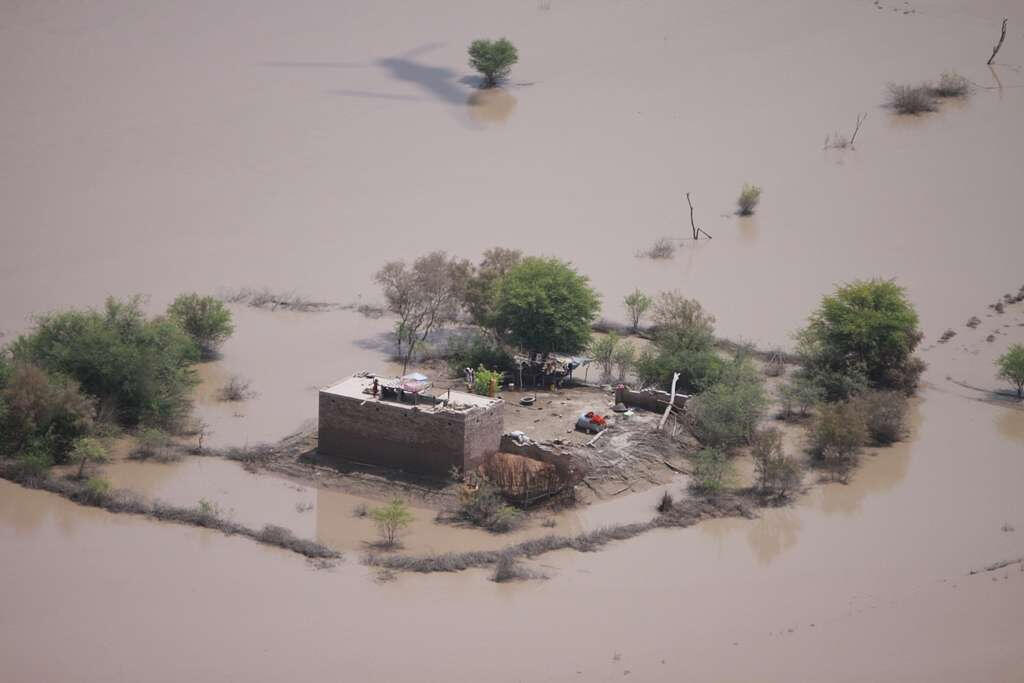
Picryl.Com. “Pakistan Devastated by Flood — PICRYL - Public Domain Media Search ...” Accessed July 9, 2026. https://www.google.com/imgres?imgurl=https://cdn2.picryl.com/photo/2010/09/04/pakistan-devastated-by-flood-65ec5b-1024.jpg&tbnid=7KXVVAkAuK-JXM&vet=1&imgrefurl=https://picryl.com/media/pakistan-devastated-by-flood-65ec5b&docid=RKKBwQmRS-OGEM&w=1024&h=683&itg=1&source=sh/x/im/m1/1&kgs=5c03e8e2f3d19df7&shem=epsd1,nisbtsac,rimspwouoe&utm_source=epsd1,nisbtsac,rimspwouoe,sh/x/im/m1/1.
Since 2016, 250 million people worldwide have been displaced within their home countries by weather-related disasters1. Each year, the number and extremity of climate disasters are growing, and thus the number of forced displacements from environmental crises are also rocketing. However, no legal, universally accepted definition of climate refugees or migrants exists2. Those displaced thus aren’t protected under the international umbrella term of “refugees” despite their forced mobility. Similarly, domestic laws haven’t yet begun to document environmental factors as a reason to offer protection3.As legislation hasn’t caught up, a starting point to advance legal frameworks is by comparing ones already applied. Out of the cases currently brought to global attention, a parallel reading of Teitiota v. New Zealand (2020)4 and Billy v. Australia (2022)5 illustrates a key legal tension. These are two of the most influential cases in this field, but the effects of climate change are shown through two different crisis types: respectively slow-onset disasters and sudden-onset disasters. In this article, a comparison between the two will dissect how we have yet to develop a consensus on solutions for humanitarian climate crises.
I. Case ReviewsIn 2020, Ioane Teitiota, a citizen of Kiribati, sought asylum in New Zealand on the grounds that rising sea levels and environmental degradation had made his home country unsafe to live in. After New Zealand rejected his claim and deported him back to Kiribati, Teitiota brought a complaint to the United Nations Human Rights Committee, arguing that New Zealand had violated his right to life under Article 6 of the International Covenant on Civil and Political Rights (ICCPR) by returning him to a country where climate change threatened his survival. ICCPR, Part III, Article 6
1. Every human being has the inherent right to life. This right shall be protected by law. No one shall be arbitrarily deprived of his life.6Here, for the first time at a UN treaty level, the Committee acknowledged that climate-led changes could pose a violation to a person’s right to life, thus opening ground to non-refoulement obligations under ICCPR’s Article 6. Though Teitiota’s case failed as the Committee ruled his situation did not pose an imminent, immediate threat to life, the case decision nevertheless became the fundamental cornerstone for climate-based asylum claims as a legal category.Two years later, the Committee faced another case. In Billy v. Australia (2022), the Committee found that Australia’s failure to protect the Torres Strait Islander communities against climate change impacts, specifically regarding coastal protection, violated their right to enjoy their culture and to be free from arbitrary influences in private life. This decision was the first time a UN treaty body held a state liable for failing to protect its citizens from climate harm.These decisions represent a start to environmental humanitarian legislation, a field that is painfully underdeveloped. Yet, both are reactionary to existing damages. There is no enforceable right to protect communities from climate-induced harm or displacement, and as climate change worsens year by year, this legislation gap will only leave more people in vulnerability.If we are to aim for change, what foundation are we currently working with?
II. What Teitiota v. New Zealand (2020) AccomplishedThe legal foundation in Teitiota v. New Zealand claimed that a) the climate damage was slow-onset, and b) Teitiota argued New Zealand had specifically violated the "non-refoulement" principle in Article 6 of the ICCPR. The Committee constructed a response around this layout. Foremost, it accepted that effects of climate change in receiving countries may expose individuals to a violation of their rights under Articles 6 or 7 of the ICCPR, especially if "without robust national and international efforts"7. Therefore, following this logic, non-refoulement isn’t confined to persecution by state or sociopolitical actors, but can be extended to any situation where return would expose an individual to potential threat towards life.Mr. Teitiota’s claim failed because his situation of slow-onset existential risk from climate-induced effects did not meet established requirements for legal intervention. The Committee found that Kiribati hadn’t yet crossed the point of imminent uninhabitability and that Mr. Teitiota didn’t demonstrate he faced a personal, immediate threat to his life. From the Committee’s point of consideration, this decision recognized the threat that climate-induced effects pose to human survival, but also maintained a calculated balance of intervention. This echoes the nature of legislation itself: once decided, a regulation becomes a metric that every case will be held up against to examine. Thus, immense caution and consideration are often applied in the long term, as explained by the concept of Judicial Minimalism8. As scholar Cass Sunstein states, the goal is to avoid final resolutions and leave space for democratic deliberation, because it cannot be “too sure that it is right”9.But what if we turn towards the perspective of the people who are facing climate-induced harm as individuals? The ICCPR’s right to life framework was designed for harm that is discrete, definable, and that can be clearly linked to a web of sociopolitical responsibilities. For instance, in cases where a prison guard tortures a detainee, we can clearly see the direction of harm, the web of cause, and thus the right to life framework can be easily applied to protect the individual’s rights. But climate displacement doesn’t work this way, as many effects stagger over decades in a compounding manner. Slow, temporal devastation may often be disregarded in early stages yet can grow into rooted issues if not treated, such as sea level rise, saltwater intrusion into agricultural land, freshwater scarcity, and more. There is no way to predict when agriculture might drop into paralysis, or when groundwater might become saline and unable to support the population. Slow-onset climate-induced harm won’t necessarily cause hundreds of casualties in a few days, but as it gradually makes a homeland uninhabitable, who is it to judge at what level of damage that legislation should intervene? If we further look towards the international stage – with every region holding unique geographical conditions and thus facing unique, unpredictable climate threats, it's impossible to monitor every case and rule at what specific point does each threat become "imminent".Those displaced by environmental factors can only access protection once the harm is so advanced that such protection is nearly meaningless. The law’s response to the gradual is often to wait for the acute. But when the arrival of such acuteness is tied to the depletion of human rights and dignity, withered away with time, is late legislation even worth the wait?
III. Billy v. Australia (2022): A Pivot From TeitiotaBilly v. Australia is frequently cited as a more successful counterpart to Teitiota v. New Zealand. The UN Human Rights Committee declared that Australia had violated Articles 17 and 27 of the Covenant by failing to implement adequate adaptation measures, ruling in favor of the Torres Strait islander claimants. Yet, this resolution is nuanced.The win was based on the use of Articles 17 and 27, which detail the rights to privacy and family life and the rights of minority communities to enjoy their own culture. The Committee found that Australia’s inaction failed to protect the claimants’ ancestral land and practices from foreseeable climate harm. Billy’s argumentation didn’t choose to advance Teitiota’s debate on Article 6. The question of what level of climate harm should amount to obligated state asylum thus remains unresolved. The dilemma between slow-onset events and legislation thresholds of imminence persists.Here, the Torres Strait islander claimants set a new precedent of strategic climate-harm litigation. Faced with the near impossibility of navigating the high requirements of Article 6, the claimants were able to find the alternative legal anchors of Articles 17 and 27, while utilizing the court’s willingness to engage with climate harm as demonstrated from Teitiota v. New Zealand (2020). This was a smart win, yet unfortunately isn't a sustainable solution for future cases.
IV. A ComparisonTogether, Teitiota (2020) and Billy (2022) demonstrate the flexibility of litigation and the potential for future legislation improvement regarding climate-induced uninhabitability. However, they moreover reveal a jarring dilemma in the current legal safeguarding system for people affected by climate disasters. Sudden-onset climate events fit the current legal framework to guarantee legal protection, but with slow-onset events, where harm is discrete and cannot be mapped onto a clear causal web, claimants are helpless. A claimant displaced by a cyclone has a better Article 6 argument than a claimant plagued by eroding land and rising island sea levels, not necessarily because the total harm is more serious, but because it fits the threshold descriptions.There is no developed legal framework for climate-induced uninhabitability or displacement protection, and the broad encompassing nature of Article 6 makes it a strong potential anchor for this field of humanitarian work. There is even no term for “climate refugees” under the 1951 Refugee Convention10. The Refugee Convention, the ICCPR, and the non-refoulement principle were all developed before climate displacement came to public awareness as a legal or political concept. They were designed to solve sociopolitical persecution, not systematic, all-enveloping environmental crises. There is currently no “best” solution for such climate cases. Thus, how do we fill this legislation gap?Perhaps we can keep sidestepping the Article 6 gap, utilizing other articles, domestic constitutional frameworks, or anything else that can yield a result without requiring a direct confrontation with the complex thresholds. Billy (2022) is proof that this is a viable option. Yet, Billy (2022) is domestic-centered and thus different from cases where claimants need to migrate to new countries. Therefore, continuous sidestepping and a lack of a new developed system would leave the category of displaced migrants most vulnerable and without a systemic legal resolution guideline to follow.A second option would be to directly challenge the standard by modifying current legal approaches to better protect neglected factors like slow-onset cause. If a new case can successfully argue that slow-onset climate harm also fulfills the “arbitrary” characteristic of Article 6, and that the returning of someone to a country nearing uninhabitability violates their right to life, this could open up a new field for climate legislation. Another approach, more radically, would be to design a completely new legal instrument to fill the legislation gap. As nearly no existing legal frameworks were built with climate displacement in mind, building new structures specifically directed towards this cause may serve to support millions.Overall, the questions that climate-induced humanitarian harm poses remain indefinite and unanswered. Responding to environmental change and human need guides us onto a road of continuous search. This path, though undoubtedly difficult, cannot be avoided when the environment worsens by the moment. Unless we begin to progress steadily in finding an answer, the current thresholds for protection will only continue to leave climate-displaced people in vulnerability.
Citations:
1 United Nations. “At the Crossroads of Crisis How the Climate Crisis Worsens Displacement and Conflict.” https://www.un.org/en/peace-and-security/at-the-crossroads-of-crisis.
2 Chazalnoël, Mariam Traore, and Dina Ionesco. “Defining Climate Migrants – Beyond Semantics.” International Organization for Migration Blog, n.d. https://weblog.iom.int/defining-climate-migrants-beyond-semantics.
3 Hattem, Julian. “‘Climate Refugees’ Do Not Exist as a Concept—But Countries Are Testing New Approaches to Offer Protection.” Migration Information Source, Migration Policy Institute, March 19, 2026. https://www.migrationpolicy.org/article/climate-migration-law.
4 Human Rights Committee. Ioane Teitiota v. New Zealand, Communication No. 2728/2016, CCPR/C/127/D/2728/2016. January 7, 2020. https://www.refworld.org/jurisprudence/caselaw/hrc/2020/123128.
5 “Daniel Billy and Others v Australia (Torres Strait Islanders Petition) - The Climate Litigation Database.” Columbia Climate School Sabin Center for Climate Change Law, n.d. Accessed June 25, 2026. https://www.climatecasechart.com/document/daniel-billy-and-others-v-australia-torres-strait-islanders-petition_191e.
6 OHCHR / Office of the United Nations High Commissioner for Human Rights. “International Covenant on Civil and Political Rights.” Human Rights Instruments. https://www.ohchr.org/en/instruments-mechanisms/instruments/international-covenant-civil-and-political-rights.
7 OHCHR / Office of the United Nations High Commissioner for Human Rights. “Historic UN Human Rights Case Opens Door to Climate Change Asylum Claims.” Press Releases. January 21, 2020. https://www.ohchr.org/en/press-releases/2020/01/historic-un-human-rights-case-opens-door-climate-change-asylum-claims.
8 LII / Legal Information Institute. “Judicial Minimalism.” https://www.law.cornell.edu/constitution-conan/article-3/section-2/clause-1/judicial-minimalism.
9 Sunstein, Cass R. “Testing Minimalism: A Reply.” Michigan Law Review 104, no. 1 (2005): 123–29. http://www.jstor.org/stable/30044500.
10 Convention and Protocol Relating to the Status of Refugees. UNHCR, n.d. https://www.unhcr.org/sites/default/files/2025-02/1951-refugee-convention-1967-protocol.pdf.
The United Kingdom's Legal Approach to Climate-Related Displacement
Jasmine Long, July 9th 2026
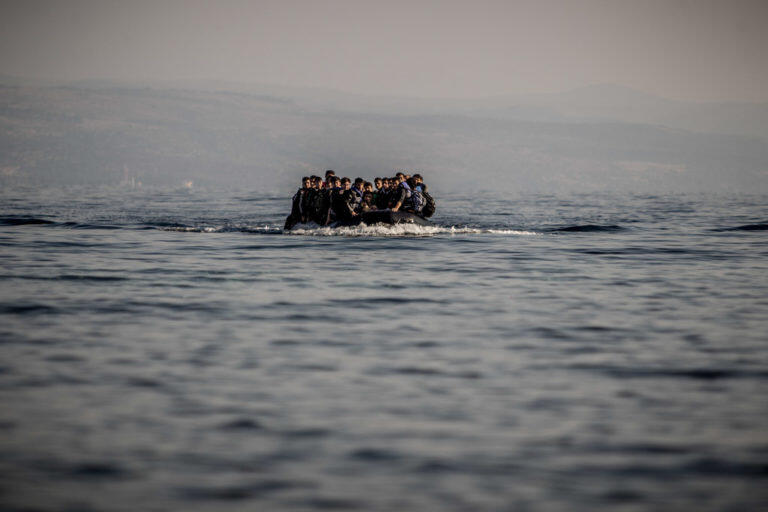
Ohrh.Law.Ox.Ac.Uk. “Ohrh.Law.Ox.Ac.Uk.” Accessed July 9, 2026. https://www.google.com/imgres?imgurl=https://ohrh.law.ox.ac.uk/wp-content/uploads/2022/01/20211125-Lesueur-LeFigaro-Picture1-768x512.jpg&tbnid=OhiJB0tjE43q8M&vet=1&imgrefurl=https://ohrh.law.ox.ac.uk/legalcategory/immigration-and-asylum/page/4/&docid=v3ZaW2hHtwU7bM&w=768&h=512&itg=1&source=sh/x/im/m1/1&kgs=462f0f6602c36267&shem=epsd1,nisbtsac,rimspwouoe&utmsource=epsd1,nisbtsac,rimspwouoe,sh/x/im/m1/1.
Climate change has increasingly become a driver of human displacement. However, the 1951 Convention relating to the Status of Refugees drafted in the aftermath of the Second World War does not expressly recognize people displaced solely by environmental factors as refugees. Consequently, courts have been required to determine whether existing legal frameworks can accommodate claims involving climate-related displacement.
The United Kingdom occupies a uniquely influential position in climate displacement discourse. As a common law jurisdiction with a highly respected judiciary, its jurisprudence and legislative choices carry disproportionate weight internationally, setting de facto benchmarks that can both catalyze progressive development or entrench restrictive approaches. Additionally, its historical role cannot be ignored. As the world’s first industrialized nation, its colonial-era emissions contributed profoundly to the atmospheric carbon burden directly driving displacement in the Global South. This historical role renders the UK’s responses to displacement crises a political and moral urgency. It is against this backdrop that the analysis of the UK’s legal approach should be understood.
United Kingdom jurisprudence demonstrates that while environmental conditions are increasingly considered relevant to international protection claims, they are rarely sufficient in and of themselves.
The traditional position of UK refugee law that environmental disasters alone do not satisfy the Refugee Convention's definition of a refugee is evident in both Horvath v Secretary of State for the Home Department [2000] UKHL 37 and Secretary of State for the Home Department v K; Fornah v Secretary of State for the Home Department [2006] UKHL 46. In Horvath, Lord Hope referred to earlier authority distinguishing persecution from hardship caused by natural disasters. The implication is that such humanitarian crises, while severe, do not ordinarily constitute persecution under the Refugee Convention because they are not directed specifically against individuals. Similarly, Lady Hale observed in K and Fornah that although people fleeing natural disasters are often described colloquially as refugees, they generally fall outside the legal definition established by the 1951 Convention.
Later jurisprudence illustrates that environmental conditions may become legally significant when linked to discriminatory human conduct. A leading example is RN (Returnees) Zimbabwe CG [2008] UKAIT 00083. The Tribunal accepted that drought-induced food insecurity, when combined with politically motivated discrimination in access to humanitarian aid, could amount to persecution.
Crucially, the Tribunal did not recognize environmental hardship alone as sufficient for international protection. Rather, the decisive factor was the presence of culpable human agency: the state's deliberate manipulation of humanitarian relief transformed a natural disaster into an act of political persecution.
Taken together, these authorities reveal a consistent jurisprudential approach: UK courts recognize climate-related displacement only when environmental harm is intertwined with legally recognizable forms of persecution or inhuman treatment, rendering its impact as a cumulative addition to the applicant(s)’s circumstances.
In conclusion, UK jurisprudence shows both the adaptability and the limits of existing international protection frameworks in responding to climate-related displacement. While courts are willing to consider environmental degradation as part of the factual matrix, protection continues to depend on proof of persecution, discriminatory state conduct, or exceptionally severe human rights violations. As climate change intensifies displacement pressures, meaningful legal protection is likely to require either legislative development or new international instruments rather than incremental judicial expansion within the current framework.